
Egyptian Tarot
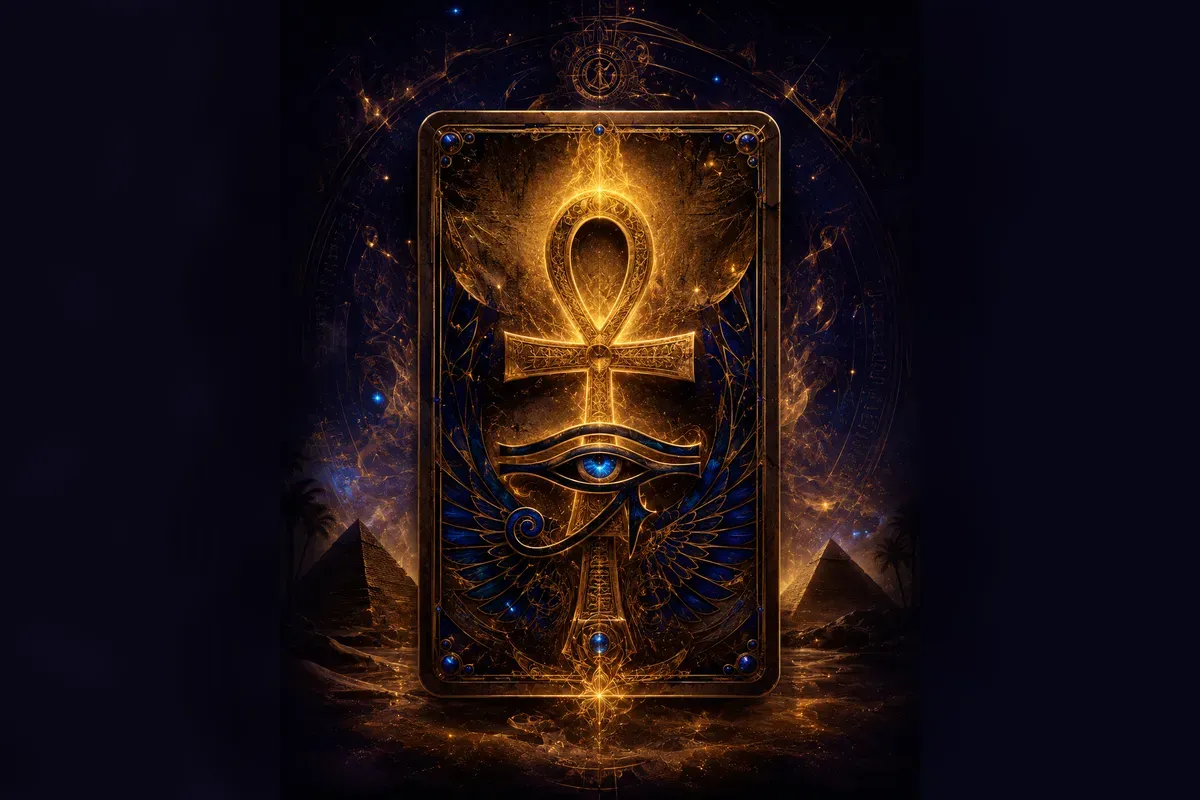
Consult the wisdom of the pharaohs. The Egyptian Tarot fuses classical tarot structure with the rich symbolism of ancient Egypt. Embeddable domain-locked widget, mobile-responsive.
Add this widget to your site
Free forever. Copy the snippet and paste it into any page — no coding required.
Egyptian tarot isn't the standard Rider-Waite deck with pyramids added. It's a distinct system rooted in the 18th-century esoteric claim that tarot originated in ancient Egypt - a theory that's historically contested but spiritually generative. The imagery draws from Egyptian gods, the afterlife architecture of the Duat, and the symbolic vocabulary of the Book of the Dead. The cards feel different because the cosmological framework is different: death here is a threshold you navigate skillfully, not an ending.
How it works
Click to draw your spread - one card for a single reflection or three cards for a more complete reading covering the past influence, present situation, and likely direction. The Egyptian tarot interpretations draw from the system's specific iconography: each card is associated with an Egyptian deity or cosmic principle, and the reading addresses both the card's general tarot meaning and its Egyptian symbolic layer.
Understanding your result
In Egyptian tarot, the Major Arcana map onto key figures and concepts from Egyptian mythology: The Magician corresponds to Thoth, the god of writing and wisdom; The Chariot to Horus, the sky-falcon navigating divine will; The Moon to Isis, the goddess of magic and hidden knowledge; Judgement to Osiris and the Weighing of the Heart. The Minor Arcana work with Egyptian elemental associations. The reading you receive addresses the card's archetypal meaning alongside its Egyptian mythological grounding, giving the interpretation a specific depth that comes from one of history's most elaborate spiritual traditions.
Frequently asked questions
Did tarot actually originate in ancient Egypt?
Historically, no - the earliest documented tarot cards are 15th-century Italian. The Egyptian origin theory was proposed by 18th-century occultists and became influential in esoteric circles, but it isn't supported by historical evidence. The Egyptian tarot draws from this esoteric tradition, not from ancient Egyptian practice.
Do I need to know Egyptian mythology to use this?
No - the interpretations are written to be accessible. Knowledge of Egyptian mythology adds richness, but the readings work without it.
How does this differ from a standard Rider-Waite reading?
The mythological grounding shifts the interpretive register. Where Rider-Waite draws from Kabbalistic and Christian symbolism, Egyptian tarot draws from a mythology where death is a journey with rules, gods have animal heads for specific reasons, and the afterlife is a place you can fail to navigate. This changes what some cards mean at their edges.
Is this for entertainment?
Yes - and for reflection through a rich and specific symbolic tradition. We don't make predictive claims.