
Marseille Tarot
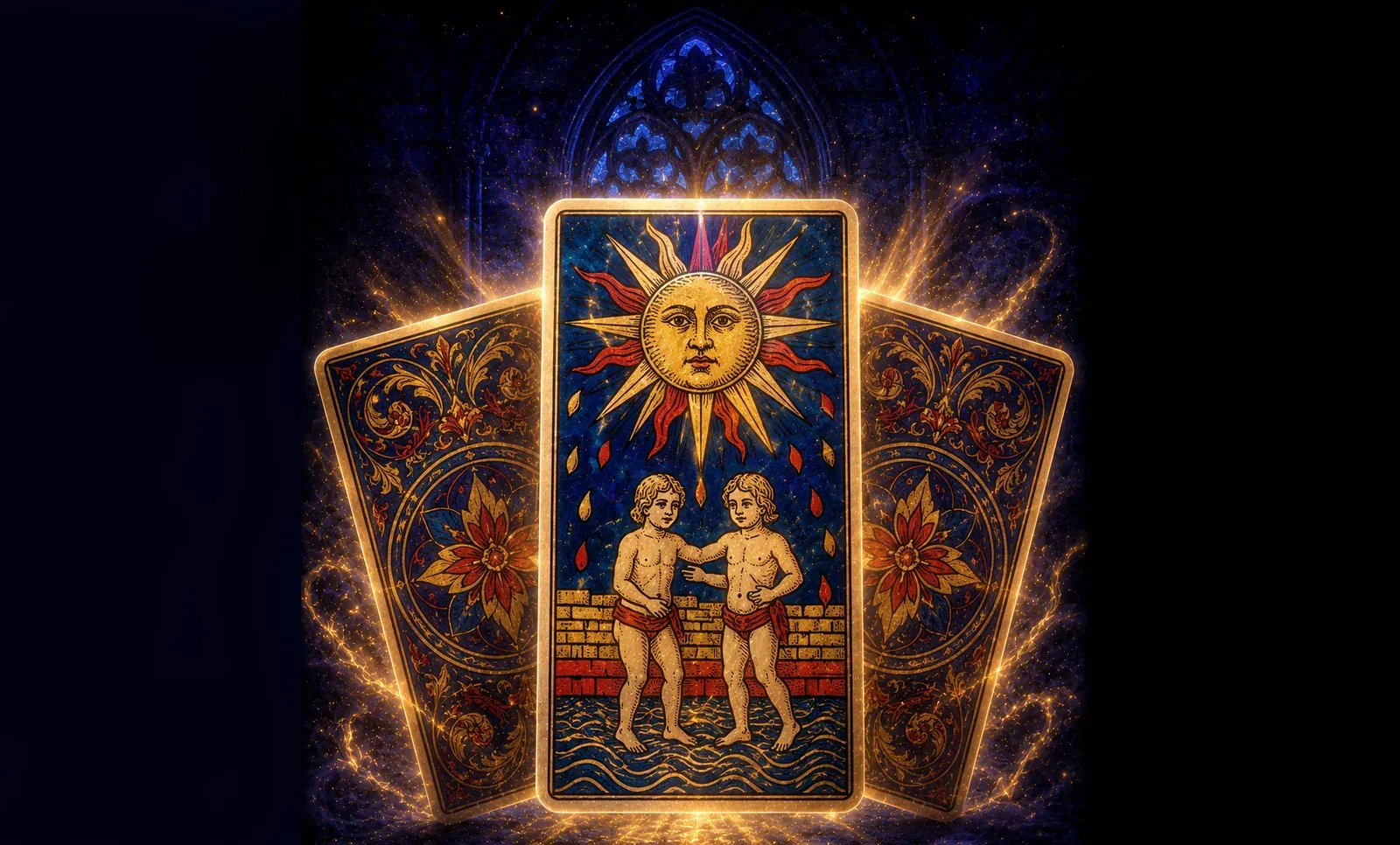
The oldest living tradition in Western cartomancy. The Marseille Tarot carries five centuries of accumulated wisdom in its bold. Embeddable domain-locked widget, mobile-responsive.
Add this widget to your site
Free forever. Copy the snippet and paste it into any page — no coding required.
The Tarot de Marseille predates Rider-Waite by several hundred years. It's starker - the pip cards (the numbered Minor Arcana) are geometric patterns, not illustrated scenes, which means the reader works more from the suit symbolism and the numbers than from literal imagery. What you lose in interpretive hand-holding you gain in directness. The Marseille reader has to bring more to the reading, and that tends to produce a different quality of insight: the images don't tell you what to see.
How it works
Choose your spread - a single card draw, a three-card past/present/future, or a full Celtic Cross. Shuffle and draw. Each card shows the traditional Marseille imagery with an interpretation that honors the system's French-Italian folk roots rather than importing Rider-Waite meanings backward. The Major Arcana keep their traditional French names: Le Mat (The Fool), Le Pendu (The Hanged Man), La Roue de Fortune.
Understanding your result
The Major Arcana in the Marseille system carry particular force. Le Chariot (VII) is about triumph through discipline, not just movement. L'Hermite (IX) is solitude chosen for illumination, not imposed isolation. Le Monde (XXI) is completion and integration - the world held in the dancer's arms. The Minor Arcana are read through suit quality (Batons/Wands: will and action; Coupes/Cups: emotion and imagination; Epees/Swords: conflict and intellect; Deniers/Coins: material world and body) combined with number symbolism. The combination is the reading.
Frequently asked questions
Is the Marseille tarot harder to read than Rider-Waite?
For beginners, yes - the unillustrated pip cards require knowing the suit and number meanings rather than reading a scene. For experienced readers, many prefer it: the system is cleaner and less open to literal over-interpretation.
Which deck is this based on?
The interpretation draws from the classical Tarot de Marseille tradition - primarily the Conver 1760 pattern and its variants. The imagery is presented in a contemporary rendering faithful to the original.
Can I use this if I only know Rider-Waite?
Yes, but expect some differences. The Marseille Magician doesn't have tools laid on a table; the Marseille Devil doesn't look like Rider-Waite's. Read the interpretations on their own terms rather than translating through what you already know.
Is tarot a prediction tool or a reflection tool?
Both, depending on how you use it. We approach it as a reflective tool - the cards illuminate what's present, not what's inevitable. For entertainment and self-reflection.