
Wish Tree Spread
Nine cards across three levels - roots, trunk, and crown - reveal what stands between you and your wish. Embeddable domain-locked widget, mobile-responsive.
Add this widget to your site
Free forever. Copy the snippet and paste it into any page — no coding required.
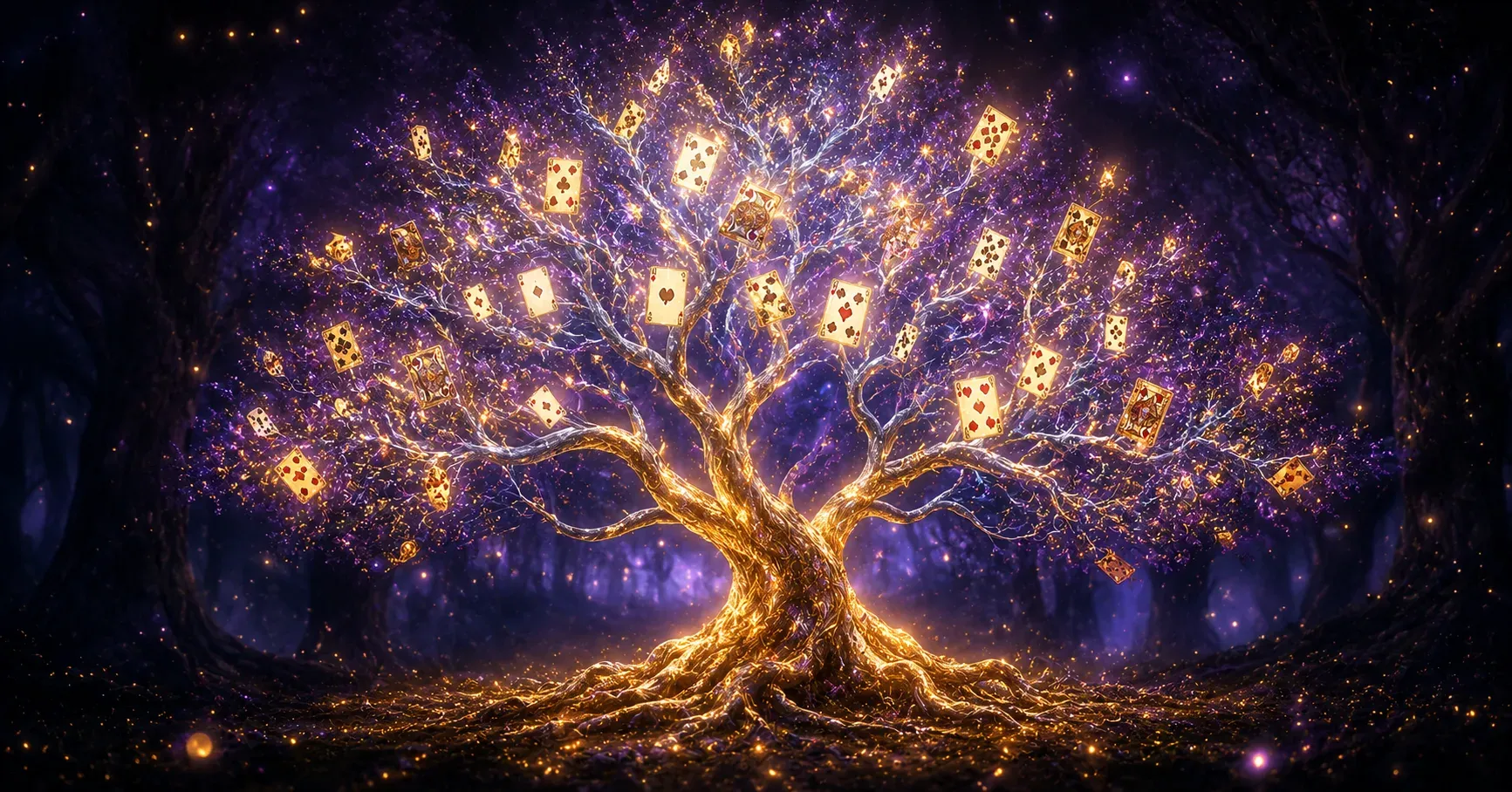
In folk traditions across Central Asia and Eastern Europe, wish trees were literal - a tree where you tied a ribbon, left an offering, pressed your wish into the bark. The Wish Tree Solitaire adapts that ritual to cards. You name your wish - specifically, not abstractly - and the spread reads the conditions around it: what supports it, what stands between it and you, what you haven't accounted for, and whether the current moment is the right one to act.
How it works
Name your wish concretely before you begin - not 'I want things to be better' but the specific thing you want. The spread deals four cards to map the terrain: the energy your wish is generating, the obstacle or challenge you'll encounter, the hidden resource you're not using, and the timing indicator - whether to move now or wait.
Understanding your result
The reading doesn't grant or deny wishes. It maps the conditions around yours. The obstacle card is often more useful than the others - knowing what's actually standing between you and the thing you want is more actionable than reassurance. The hidden resource card frequently surprises people: it names something available to them that they've underestimated or overlooked. The timing card reads current conditions, not fate.
Frequently asked questions
Does naming my wish affect the reading?
Yes - in the sense that holding a specific wish in mind focuses the reading. The cards respond to the intention you bring. A vague wish produces a less useful reading than a specific one.
What kinds of wishes work for this spread?
Practical ones work better than abstract ones - a specific outcome, relationship, change, or opportunity. 'I want to feel at peace' is harder to read around than 'I want to leave this job and it to go smoothly.'
What if the timing card suggests waiting?
Waiting is information, not defeat. A timing indicator toward patience doesn't mean the wish is wrong - it means the moment hasn't assembled itself yet. That's worth knowing.
Is this based on a traditional spread?
The wish tree framing is drawn from folk custom; the four-card structure is original to this spread. It's not a reproduction of an older layout.