
Tea Leaf Reading
The ancient art of tasseography - let the patterns in your cup reveal your fortune. Embeddable domain-locked widget, mobile-responsive.
Add this widget to your site
Free forever. Copy the snippet and paste it into any page — no coding required.
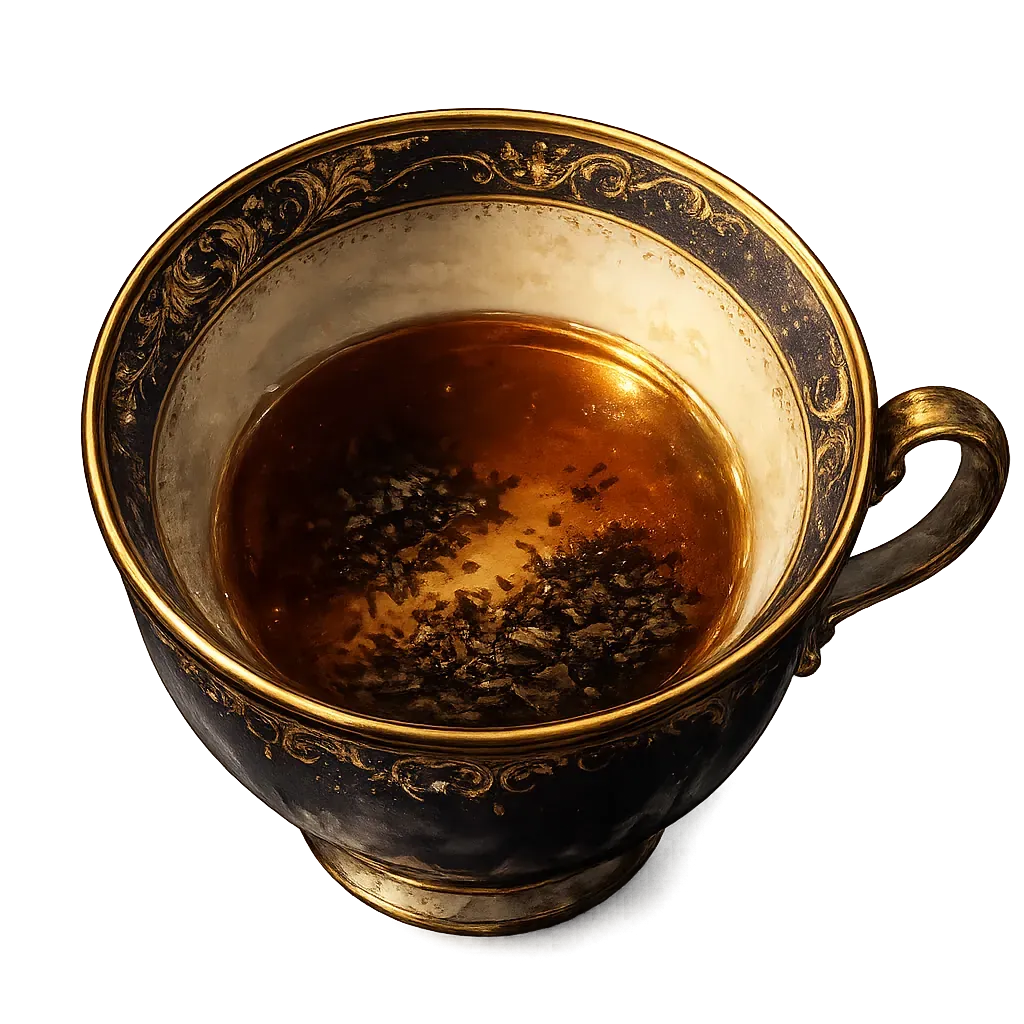
Tasseography - reading tea leaves, or the residue left in a cup after drinking - is one of the most intimate divination practices in existence. You made the cup. You drank it. What remains is yours in a way that a drawn card isn't. The shapes left in the leaves aren't random noise; they're a projection surface for the kind of perception that pattern-matching produces when you're asking it to work on a real question. This is reading as ritual - slow, personal, particular.
How it works
Drink your tea, leaving a small amount of liquid and the settled leaves in the cup. Swirl the cup three times with your non-dominant hand, then invert it onto the saucer and let it drain. Turn the cup right-side up and examine the shapes. The handle represents you. Leaves near the rim are present or soon; those near the base are further away or deeper-rooted. Use the symbol guide here to read what you see.
Understanding your result
Tasseography doesn't have fixed rules - it has accumulated conventions. A bird near the rim traditionally signals news or communication coming soon. A snake in the leaves near the base is a long-running caution or enemy pattern; near the rim it's more immediate. Mountains suggest obstacles requiring effort. A clear path toward the handle is generally positive momentum. Read shapes loosely - the first impression is usually the right one.
Frequently asked questions
Does this work with coffee grounds too?
Yes - tasseography with coffee (tasseomancy in the stricter sense) is equally traditional, particularly in Turkish and Greek practice. The same positional rules apply: handle = you, rim = soon, base = deep or distant.
What kind of tea works best for reading?
Loose-leaf teas without a strainer - oolong, gunpowder green, or any full-leaf black tea gives good residue. Tea bags leave too little. The quality of the leaves matters less than having actual loose leaf.
What if I can't see any clear shapes?
Look again with softer focus - not searching for a specific image, but letting shapes emerge. The first thing you notice, however vague, is where to start. Abstract impressions count as much as recognizable symbols.
Is this for entertainment?
Yes - self-reflection and entertainment. Tasseography is a centuries-old folk practice; we offer it as such.