
Love Triangle Spread
Three hearts, one truth. This spread maps the hidden dynamics between you, your partner, and a third presence - revealing where. Embeddable domain-locked widget, mobile-responsive.
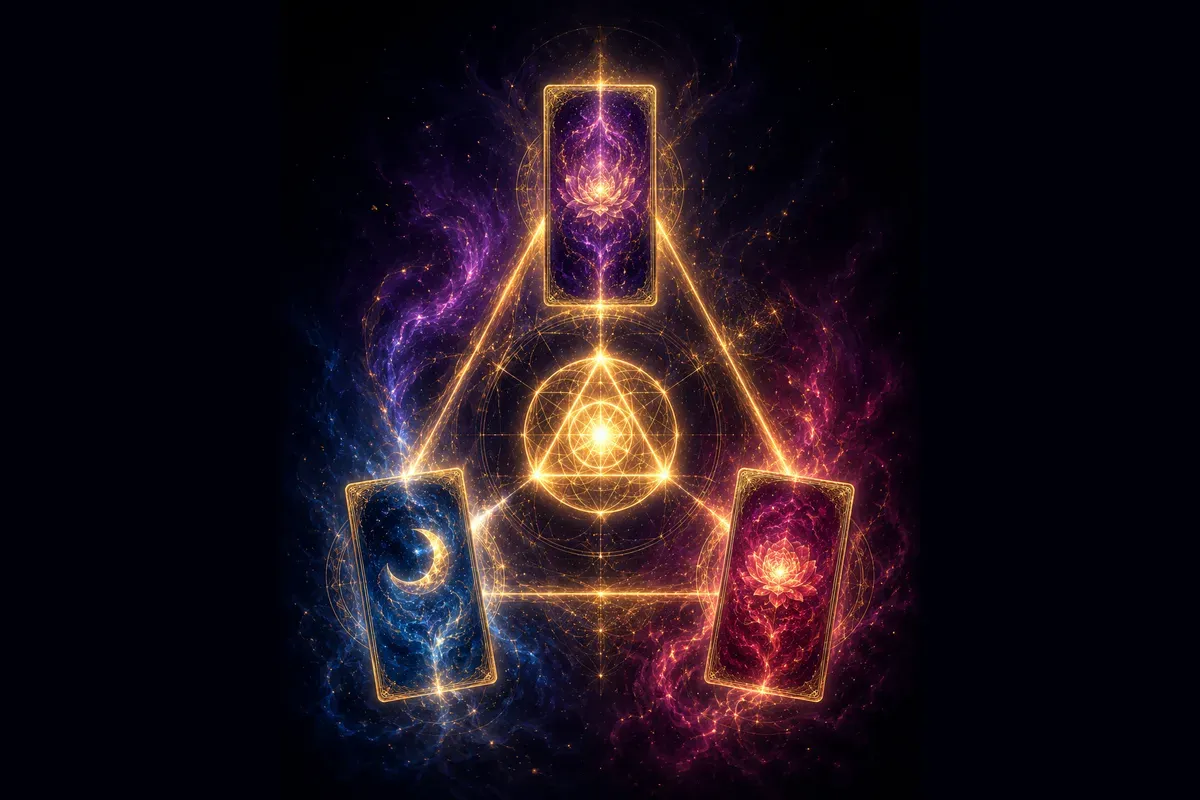
Three people, or three points in one dynamic. The love triangle spread names what's present without flinching: what you carry, what another person carries, what the third element carries (whether that's a rival, an ex, or the choice itself), and what sits at the center of the whole configuration. Six cards - two per point, plus the core. This spread is for when the situation is genuinely complicated and you need a clear shape for it.
How it works
Name all three points before drawing - you, and the two other elements (which might be two people, or a person and a choice). Draw six cards: two for each point in the triangle, plus one at the center for the dynamic as a whole. The two cards per position show the outer face and the inner reality of each party. The center card holds what's actually driving the configuration.
Understanding your result
Court cards at the three points are illuminating - if the same court card appears twice, one person is influencing the whole triangle from a single mode. The center card is where to spend most of your attention: Justice there means a decision is coming that must be made fairly. The Star means hope is running underneath the tension. The Devil means something binding is in play - desire, habit, or fear - that all three points are organized around.
Frequently asked questions
What if my triangle is between me and a choice, not two other people?
The spread works that way too - assign the three points as: you, the first option, and the second option. The structure holds for any three-way dynamic, not only romantic situations.
Should I do this spread if I'm the third party - not the one in the relationship?
Yes - the spread maps the whole triangle without assigning roles as 'right' or 'wrong.' All three points are treated equally by the layout.
What do the two cards per position mean in relation to each other?
The first card for each point is the outward expression - what's visible or stated. The second is the inner reality - what's actually driving them. When they align, that person is being straightforward. When they conflict, there's a gap between what's shown and what's felt.
Is this for entertainment?
Yes - self-reflection and entertainment. We make no claims about other people's feelings or choices.